
The isms of Western Art

Updated: Aug 1
What all these artistic movements have in common is their rejection of traditional, academic art, but it is not always easy to understand what they stand for or what separates them. Here is a concise, though not complete, guide to help you navigate the complex world of art movements.

Impressionism was a 19th-century French art movement that shifted the emphasis from realistic representation to capturing fleeting moments and sensations. The changing effects of light on landscapes and urban settings became a cornerstone of the movement. Brush strokes became short and visible, and the colors used were bold and pure.

Post-Impressionism grew out of Impressionism in the late 19th century, rejecting the Impressionist emphasis on naturalism. Instead, artists used subjective and symbolic meaning, structured and distorted shapes, vivid colors, and thick paint to convey inner feelings rather than fleeting moments.

Symbolism was a late 19th-century European movement that used symbols, colors, and images to portray ideas, emotions, spiritual themes, and abstract concepts like love or death. Artists often borrowed from mythology, folklore, dreams, and the subconscious.

Fauvism was a short-lived, early 20th-century art movement that used intense and often non-realistic colors to create emotionally charged works. Characterized by bold brushwork, simple forms, and expression over realism, it served as a precursor to both Expressionism and Cubism.

Expressionism developed in the early 20th century. Using bold, jarring colors, distorted images, and intense brushwork, artists in this movement were more concerned with inner feelings than outward appearances. It differed from Post-Impressionism in the sheer intensity of the emotions it portrayed; anxiety, deep psychological moods, and alienation were often depicted with harsh lines and simple forms. Ultimately, Expressionism was a rejection of both Impressionism and Post-Impressionism.

German Expressionism was a distinct branch of the broader movement. Stemming from Germany during the pre-WWI and Weimar Republic eras, it was deeply shaped by the political and social turmoil of the time. This manifested in highly contrasted tones and unsettling, distorted colors, such as blood-red skies. Post-Expressionism eventually rejected this intense emotional instability while still retaining exaggerated colors and expressive brushwork; instead, the focus shifted toward seeking deeper meaning and structure through clearer, more objective depictions.
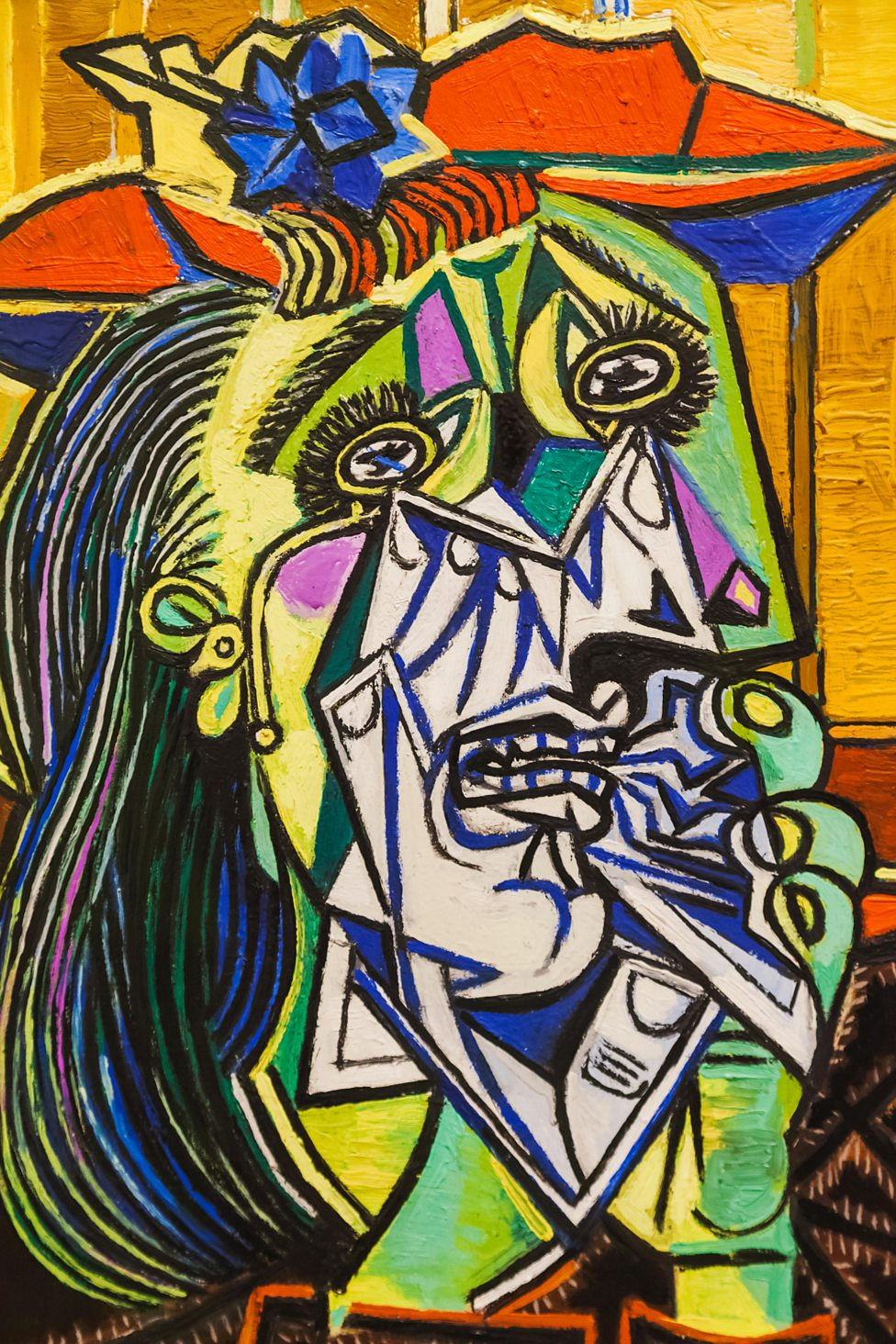
Cubism was developed by Pablo Picasso and Georges Braque in the early 20th century. By breaking objects and figures down into geometric forms, the movement introduced a new way to represent reality—showing multiple viewpoints simultaneously.

Surrealism was a 20th-century movement that challenged the perception of reality. Inspired by dreams and the subconscious, artists created mysterious, dreamlike images.

Dadaism was an early 20th-century art movement that spanned Europe and America. Rejecting traditional aesthetics, logic, and reason, Dadaists embraced satire, nonsense, and absurdity. They declared that anything could be art, leading artists to pioneer collage, photomontage, and "ready-made" objects.


Comments