
The Human Figure According to Jenny Saville

Updated: 5 minutes ago
If Francis Bacon distorts the human figure and Lucian Freud depicts the human figure in unflinching reality, Jenny Saville brings us monumental, flesh-dense canvases that reflect her own theology of the body. Mainly through the representation of the female nude, we are presented with images that do not portray perfection or total health. Saville uses medical textbooks, plastic surgeon manuals, and clinical photos to explore the physical reality of the human body. We are far from perfect, but still worthy of attention and understanding.

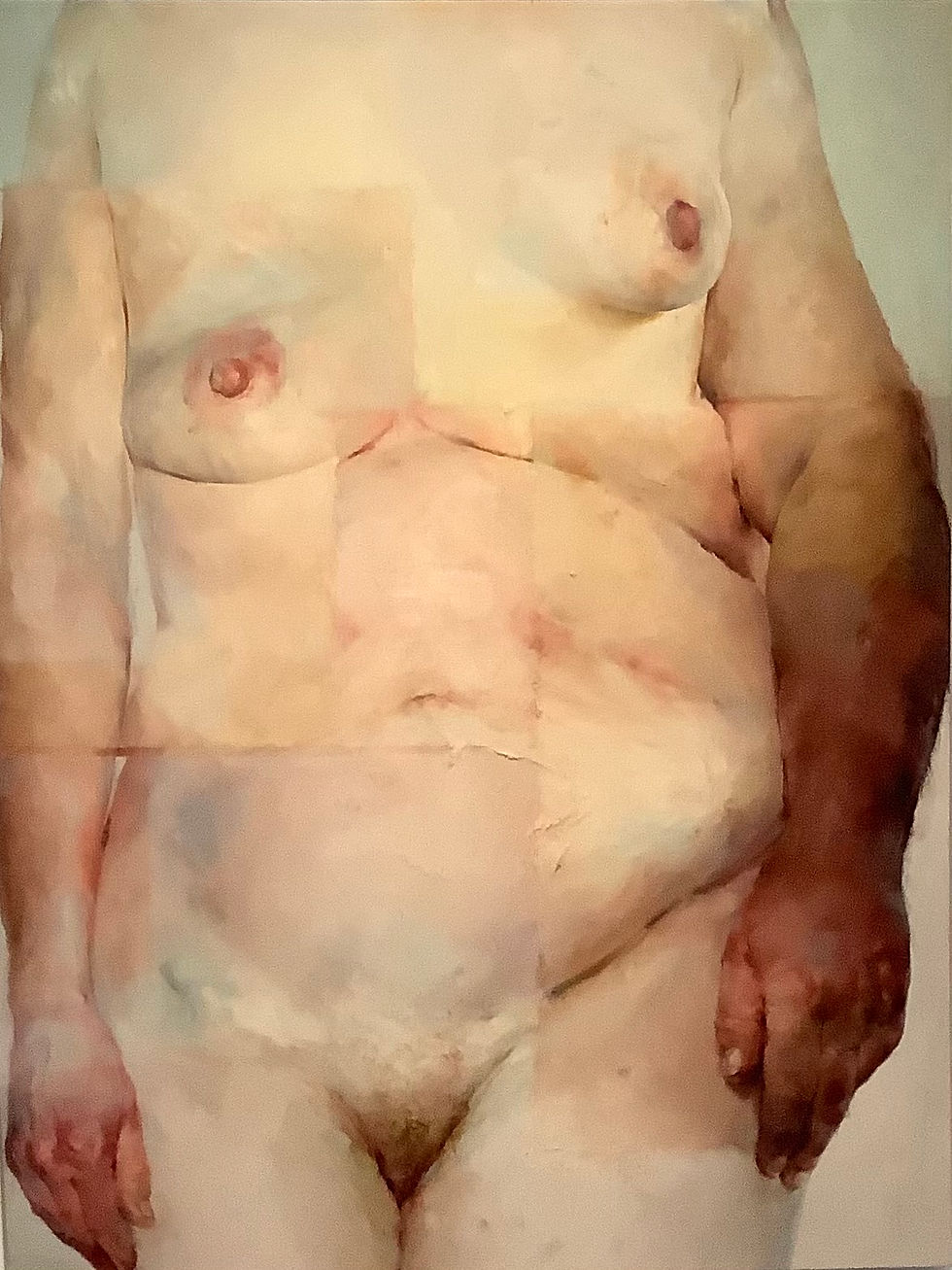


Notice how, at first glance, what looks like one massive body in some of these paintings is actually a collage-like assembly of different women’s body parts—almost as if Frankenstein had assembled these creatures. These are dramatic depictions of women. Look at the emphasized, large face of a woman lying on the floor or on a coroner’s table; you feel a deep sadness in looking at a face that while no longer alive, is still full of life and pain. It is simply horrific to look at the painting of three large female bodies bound together with string. And tell me if you are not agitated to see a large woman having to balance herself on a small, inadequate stool, or the depiction of two heads sharing one body. We are meant to look at our imperfections, not hide them behind a mythology of the female body. And that hurts.


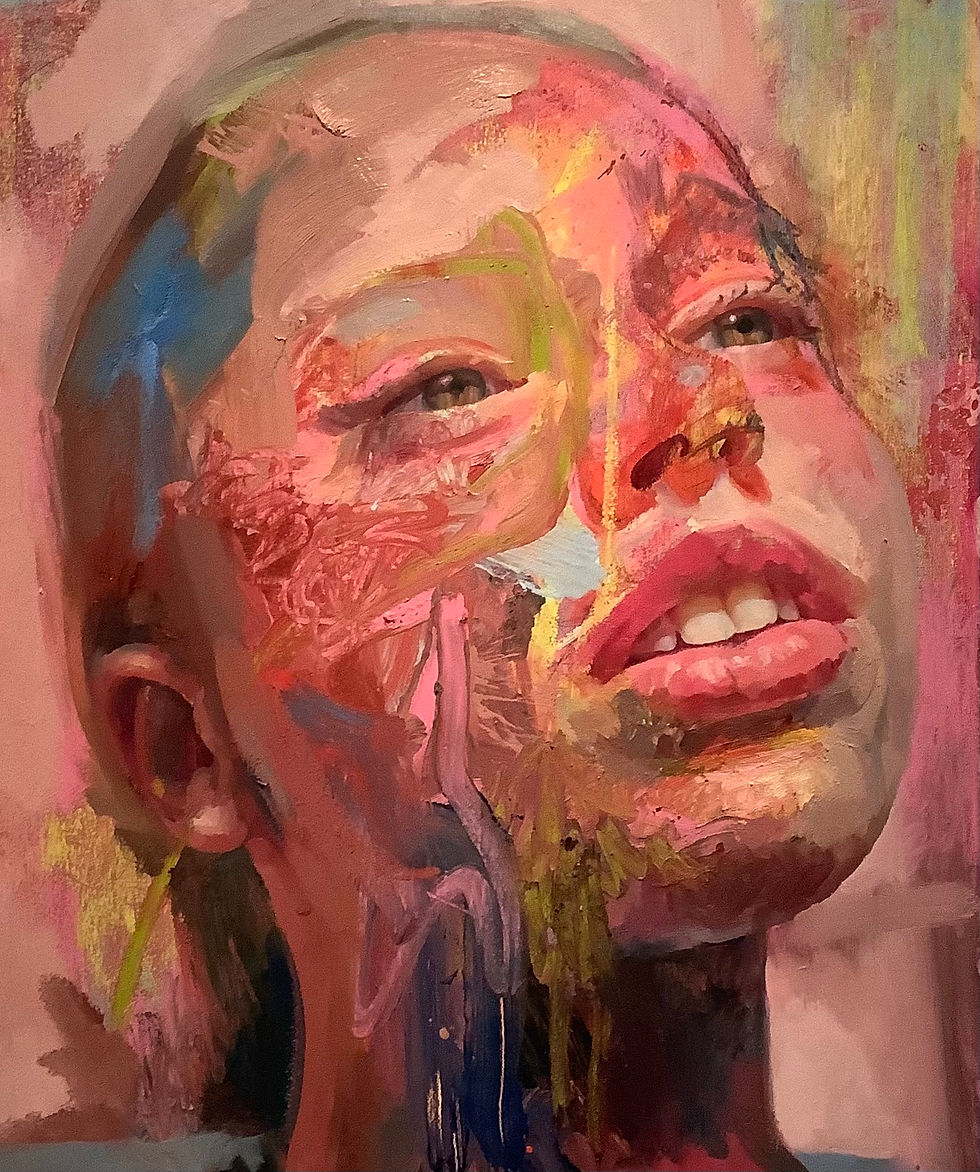


These portraits of teens were painted while Saville lived in Palermo. The gaze of these eyes is striking; we read the innocence of their youth intertwined with a defiant challenge to what awaits them. The intensity of the eyes is matched only by the vitality and sensuality of their lips.
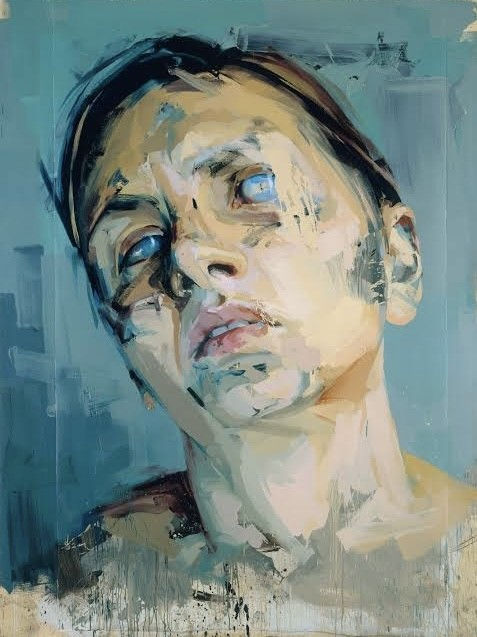
This portrait of a young Neapolitan blind woman is striking. The sharp angle of her head and the gaze of her unseeing eyes are evocative of a conversation with the divine and a nod to Renaissance religious iconography. This was painted by Saville as a study for an altarpiece and eventually installed in 2021 in a deconsecrated church chapel in Florence.


If Saville has been inspired by Renaissance art, these other works show the influence of Etruscan sarcophagi and Byzantine art. In typical Etruscan sarcophagi, the man is depicted on the left and the woman on the right, often smaller in size. In the Saville double portrait, the woman of the couple is on the left and positioned higher than her male counterpart. The pose is awkward and certainly not permanent. In the Byzantine-inspired Pietà, the throne is not a symbol of heavenly grace, but an indictment of imperial excess. Grand civilizations are sustained by the suffering of ordinary people.

Saville carries this same Pietà imagery into the present to illustrate the horror of contemporary international strife. In Aleppo, the bodies of children are piled upon what appears to be an image of a Madonna, totally covered by the grotesque burden she holds in her arms. In the traditional Pietà by Michelangelo, the Madonna holds the dead Christ in stillness; in Saville’s Pietà paintings, there is a restless movement, indicating that there was life just before death—and that makes these paintings all the more poignant.
All these works by Jenny Saville are displayed at Ca' Pesaro in Venice until November 22, 2026. I intentionally omitted the titles of most works in this post. At the exhibition, the wall labels were placed far from the paintings and were so small that they were hard to read—a clear message from the artist: don’t worry about the title or what the label says; just look at the work and tell me what you see.


Comments